Operation of Machine

1. Flat Belt Conveyor 1
1.1.3D Model
-
Product Contact Parts - SS304
-
Product Non-Contact Parts - MS, RAL 7045
Flat Belt Conveyor 1

1.2 Flat Belt Infeed Conveyor
-
The shrink bottle bundle came from the shrink machine onto the flat-belt infeed conveyor.
-
It consists of an infeed sensor and a pusher cylinder.
-
The shrink-wrapped bottle bundle comes from the shrink machine onto the flat-belt infeed conveyor. The sensor detects the bottle bundle and sends a signal to the PLC.
-
When the shrink-wrapped bottle bundle reaches the end of the conveyor, the sensor detects its presence and sends a signal to the PLC. The PLC then actuates the pusher cylinder, which pushes the matrix onto the rotary table.
1.3. Maintenance
Important Precautions:
READ this manual before operating or servicing this equipment.
-
Always remove power and wait at least 30 seconds before connecting/disconnecting any internal harnesses. Failure to observe these precautions may result in damage to or destruction of the equipment.
-
ALWAYS take proper precautions when handling static sensitive devices.
-
SAVE this manual for future reference.
-
DO NOT allow untrained personnel to operate, clean, inspect, maintain, service or tamper with this equipment.
-
DO NOT connect or disconnect any digital or analogue components to the equipment with power connected or damage may result.
Click the below Maintenance Schedule for Flat Belt Conveyor 1
1.4. Risk Assessment
Risk Assessment or HAZOP, or a Hazard and Operability Study, is a systematic way to identify possible hazards in a work process. In this approach, the process is broken down into steps, and every variation in work parameters is considered for each step, to see what could go wrong.
Please refer the below attachment for HAZOP Document.
1.5. Troubleshooting
Troubleshooting is the process of identifying, diagnosing, and resolving problems or issues that arise in various systems, equipment, or processes. it involves a systematic approach to problem-solving, using a combination of analytical, technical, and problem-solving skills.
The first step in troubleshooting is to identify the problem. This can involve gathering information about the issue, including when it started, what systems or equipment are affected, and any error messages or symptoms that are observed. Once the problem is identified, the next step is to diagnose the root cause. This involves analyzing the information collected and using technical knowledge to determine what is causing the issue. After the root cause is identified, the next step is to develop a plan for resolving the issue.
Refer to the below about the Troubleshooting.
1.6 Spare Parts
Note: Click on the Description for details about Spare parts
3.
5.
Description
Consumables
Essential
Recomended
Sr No.
1.
2.
4.
1
1
1
1
1
1
2. Rotary Table Assembly
2.1.3D Model
-
Product Contact Parts - SS304
-
Product Non-Contact Parts - MS, RAL 7045
Rotary Table Assembly

2.2 Rotary Table Assembly
-
The shrink-wrapped bottle bundle is transferred on the flat belt infeed conveyor, and the mounted cylinder pushes the matrix onto the rotary table assembly.
-
The assembly consists of a rotary cylinder, and pusher cylinder with reed feedback interlocks.
-
The pusher cylinder pushes the shrink-wrapped bottle bundle onto the infeed conveyor.
2.3. Maintenance
Important Precautions:
READ this manual before operating or servicing this equipment.
-
Always remove power and wait at least 30 seconds before connecting/disconnecting any internal harnesses. Failure to observe these precautions may result in damage to or destruction of the equipment.
-
ALWAYS take proper precautions when handling static sensitive devices.
-
SAVE this manual for future reference.
-
DO NOT allow untrained personnel to operate, clean, inspect, maintain, service or tamper with this equipment.
-
DO NOT connect or disconnect any digital or analogue components to the equipment with power connected or damage may result.
Click the below Maintenance Schedule for Rotary Table Assembly
2.4. Risk Assessment
Risk Assessment or HAZOP, or a Hazard and Operability Study, is a systematic way to identify possible hazards in a work process. In this approach, the process is broken down into steps, and every variation in work parameters is considered for each step, to see what could go wrong.
Please refer the below attachment for HAZOP Document.
2.5. Troubleshooting
Troubleshooting is the process of identifying, diagnosing, and resolving problems or issues that arise in various systems, equipment, or processes. it involves a systematic approach to problem-solving, using a combination of analytical, technical, and problem-solving skills.
The first step in troubleshooting is to identify the problem. This can involve gathering information about the issue, including when it started, what systems or equipment are affected, and any error messages or symptoms that are observed. Once the problem is identified, the next step is to diagnose the root cause. This involves analyzing the information collected and using technical knowledge to determine what is causing the issue. After the root cause is identified, the next step is to develop a plan for resolving the issue.
Refer to the below about the Troubleshooting.
2.6 Spare Parts
Note: Click on the Description for details about Spare parts
3.
Description
Consumables
Essential
Recomended
Sr No.
1.
2.
4.
1
1
1
1
5.
VUVS-LK20-B52-D-G18-1C1-S
2
1
1
1
1
2
3. Modular Infeed Conveyor
3.1.3D Model

-
Product Contact Parts - SS304
-
Product Non-Contact Parts - MS, RAL 7045
Modular Infeed Conveyor
3.2 Modular Infeed Conveyor
-
The infeed assembly receives Shrink Bundle Matrix from the Shrink Bundling Machine.
-
The side shift cylinder pushes the shrink bottle bundle below the aggregation system.
-
The aggregation section scans the Shrink Bottle Bundle and processes accept/reject signals. Rejected bundles are diverted using a rejection cylinder controlled by integrated sensors.
-
Accepted Shrink Bottle Bundles are picked by the gantry and placed into the empty shipper.
3.3. Maintenance
Important Precautions:
READ this manual before operating or servicing this equipment.
-
Always remove power and wait at least 30 seconds before connecting/disconnecting any internal harnesses. Failure to observe these precautions may result in damage to or destruction of the equipment.
-
ALWAYS take proper precautions when handling static sensitive devices.
-
SAVE this manual for future reference.
-
DO NOT allow untrained personnel to operate, clean, inspect, maintain, service or tamper with this equipment.
-
DO NOT connect or disconnect any digital or analogue components to the equipment with power connected or damage may result.
Click the below Maintenance Schedule for Modular Conveyor
3.4. Risk Assessment
Risk Assessment or HAZOP, or a Hazard and Operability Study, is a systematic way to identify possible hazards in a work process. In this approach, the process is broken down into steps, and every variation in work parameters is considered for each step, to see what could go wrong.
Please refer the below attachment for HAZOP Document.
3.5. Troubleshooting
Troubleshooting is the process of identifying, diagnosing, and resolving problems or issues that arise in various systems, equipment, or processes. it involves a systematic approach to problem-solving, using a combination of analytical, technical, and problem-solving skills.
The first step in troubleshooting is to identify the problem. This can involve gathering information about the issue, including when it started, what systems or equipment are affected, and any error messages or symptoms that are observed. Once the problem is identified, the next step is to diagnose the root cause. This involves analyzing the information collected and using technical knowledge to determine what is causing the issue. After the root cause is identified, the next step is to develop a plan for resolving the issue.
Refer to the below about the Troubleshooting.
Note: Click on the Description for details about Spare parts
3.
5.
Description
Consumables
Essential
Recomended
Sr No.
1.
2.
4.
6.
7.
8.
9.
10.
1
1
1
1
1
1
1
1
1
1
11.
12.
13.
14.
1
1
1
1
1
1
2
1
1
1
2
1
1
4. Infeed Conveyor Assembly
4.1.3D Model

-
Product Contact Parts - SS304
-
Product Non-Contact Parts - MS, RAL 7045
Infeed Conveyor Assembly
4.2 Infeed Conveyor Assembly
-
The collation platform assembly receives the grouped Shrink Bottle Matrix Bundle from the Infeed Collation Assembly.
-
It consists of stopper and matrix-pushing cylinders with reed feedback and matrix-detect sensors.
-
The assembly forms and holds the matrix until proper detection is achieved.
-
The aggregation system detects if the Bar Code Is Proper or not and gives a signal to the Gantry for picking; otherwise, the rejection cylinder will pushing the matrix into rejection bin.
-
The matrix is then ready for pickup by the Gantry.
4.3. Maintenance
Important Precautions:
READ this manual before operating or servicing this equipment.
-
Always remove power and wait at least 30 seconds before connecting/disconnecting any internal harnesses. Failure to observe these precautions may result in damage to or destruction of the equipment.
-
ALWAYS take proper precautions when handling static sensitive devices.
-
SAVE this manual for future reference.
-
DO NOT allow untrained personnel to operate, clean, inspect, maintain, service or tamper with this equipment.
-
DO NOT connect or disconnect any digital or analogue components to the equipment with power connected or damage may result.
Click the below Maintenance Schedule for Infeed Conveyor
4.4. Risk Assessment
Risk Assessment or HAZOP, or a Hazard and Operability Study, is a systematic way to identify possible hazards in a work process. In this approach, the process is broken down into steps, and every variation in work parameters is considered for each step, to see what could go wrong.
Please refer the below attachment for HAZOP Document.
4.5. Troubleshooting
Troubleshooting is the process of identifying, diagnosing, and resolving problems or issues that arise in various systems, equipment, or processes. it involves a systematic approach to problem-solving, using a combination of analytical, technical, and problem-solving skills.
The first step in troubleshooting is to identify the problem. This can involve gathering information about the issue, including when it started, what systems or equipment are affected, and any error messages or symptoms that are observed. Once the problem is identified, the next step is to diagnose the root cause. This involves analyzing the information collected and using technical knowledge to determine what is causing the issue. After the root cause is identified, the next step is to develop a plan for resolving the issue.
Refer to the below about the Troubleshooting.
4.6 Spare Parts
Note: Click on the Description for details about Spare parts
3.
5.
Description
Consumables
Essential
Recomended
Sr No.
1.
2.
4.
6.
7.
8.
1
2
1
1
1
1
1
1
9.
10.
11.
1
1
1
1
1
2
2
1
1
5. Gantry Assembly With PickHead
5.1.3D Model

-
Product Contact Parts - SS304
-
Product Non-Contact Parts - MS, RAL 7045
Gantry Assembly
5.2 Gantry Assembly with PickHead
-
The sensor gives a signal to the gantry for picking.
-
The accepted shrink bottle bundle is picked by the gantry.
-
It consists of a servo motor-operated clamp that holds the shrink-wrapped bottle bundle matrix. The gantry pick head uses vacuum cups to grip and lift the matrix, while a pneumatic cylinder is used for pushing.
-
The gantry picks the shrink-wrapped bottle bundle matrix and places it into the shipper as per the predefined matrix layer arrangement.
-
After the shipper is filled, the gantry sends a signal to the hopper indicating that the shipper is full.
5.3. Maintenance
Important Precautions:
READ this manual before operating or servicing this equipment.
-
Always remove power and wait at least 30 seconds before connecting/disconnecting any internal harnesses. Failure to observe these precautions may result in damage to or destruction of the equipment.
-
ALWAYS take proper precautions when handling static sensitive devices.
-
SAVE this manual for future reference.
-
DO NOT allow untrained personnel to operate, clean, inspect, maintain, service or tamper with this equipment.
-
DO NOT connect or disconnect any digital or analogue components to the equipment with power connected or damage may result.
Click the below Maintenance Schedule for Collation Unit
5.4. Risk Assessment
Risk Assessment or HAZOP, or a Hazard and Operability Study, is a systematic way to identify possible hazards in a work process. In this approach, the process is broken down into steps, and every variation in work parameters is considered for each step, to see what could go wrong.
Please refer the below attachment for HAZOP Document.
5.5. Troubleshooting
Troubleshooting is the process of identifying, diagnosing, and resolving problems or issues that arise in various systems, equipment, or processes. it involves a systematic approach to problem-solving, using a combination of analytical, technical, and problem-solving skills.
The first step in troubleshooting is to identify the problem. This can involve gathering information about the issue, including when it started, what systems or equipment are affected, and any error messages or symptoms that are observed. Once the problem is identified, the next step is to diagnose the root cause. This involves analyzing the information collected and using technical knowledge to determine what is causing the issue. After the root cause is identified, the next step is to develop a plan for resolving the issue.
Refer to the below about the Troubleshooting.
5.6 Spare Parts
Note: Click on the Description for details about Spare parts
3.
5.
Description
Consumables
Essential
Recomended
Sr No.
1.
2.
4.
6.
7.
8.
1
1
1
1
1
1
10.
11.
12.
13.
14.
15.
16.
17.
18.
19.
20.
21.
1
1
1
1
1
2
1
1
1
1
1
1
1
22.
9.
1
1
1
1
1
1
1
1
6. Shipper Magazine & Picture Frame
6.1.3D Model

-
Product Contact Parts - SS304
-
Product Non-Contact Parts - MS, RAL 7045
Shipper Magazine & Picture Frame
6.2 Shipper Magazine & Picture Frame
-
The assembly stores flat shippers and feeds them towards the pick position for further processing.
-
It consists of a magazine with a cylinder system along with a picture frame to hold and align the shipper properly.
-
Sensors are provided to detect shipper presence in the magazine and at the picture frame for proper positioning.
-
The assembly ensures the shipper is correctly aligned and ready for pickup by the Plucker assembly and generates an alarm if no shipper is available.
6.3. Maintenance
Important Precautions:
READ this manual before operating or servicing this equipment.
-
Always remove power and wait at least 30 seconds before connecting/disconnecting any internal harnesses. Failure to observe these precautions may result in damage to or destruction of the equipment.
-
ALWAYS take proper precautions when handling static sensitive devices.
-
SAVE this manual for future reference.
-
DO NOT allow untrained personnel to operate, clean, inspect, maintain, service or tamper with this equipment.
-
DO NOT connect or disconnect any digital or analogue components to the equipment with power connected or damage may result.
Click the below Maintenance Schedule for Shipper Magazine & Picture Frame
6.4. Risk Assessment
Risk Assessment or HAZOP, or a Hazard and Operability Study, is a systematic way to identify possible hazards in a work process. In this approach, the process is broken down into steps, and every variation in work parameters is considered for each step, to see what could go wrong.
Please refer the below attachment for HAZOP Document.
6.5. Troubleshooting
Troubleshooting is the process of identifying, diagnosing, and resolving problems or issues that arise in various systems, equipment, or processes. it involves a systematic approach to problem-solving, using a combination of analytical, technical, and problem-solving skills.
The first step in troubleshooting is to identify the problem. This can involve gathering information about the issue, including when it started, what systems or equipment are affected, and any error messages or symptoms that are observed. Once the problem is identified, the next step is to diagnose the root cause. This involves analyzing the information collected and using technical knowledge to determine what is causing the issue. After the root cause is identified, the next step is to develop a plan for resolving the issue.
Refer to the below about the Troubleshooting.
6.6 Spare Parts
Note: Click on the Description for details about Spare parts
3.
5.
Description
Consumables
Essential
Recomended
Sr No.
1.
2.
4.
6.
1
1
1
1
1
1
1
7. Plucker Unit Assembly
7.1.3D Model

-
Product Contact Parts - SS304
-
Product Non-Contact Parts - MS, RAL 7045
Plucker unit Assembly
7.2 Plucker Unit Assembly
-
The plucker assembly picks the flat shipper from the shipper magazine assembly.
-
It consists of a pneumatic plucker cylinder with sensor feedback.
-
The shipper is held from one face using a vacuum or mechanical grip.
7.3. Maintenance
Important Precautions:
READ this manual before operating or servicing this equipment.
-
Always remove power and wait at least 30 seconds before connecting/disconnecting any internal harnesses. Failure to observe these precautions may result in damage to or destruction of the equipment.
-
ALWAYS take proper precautions when handling static sensitive devices.
-
SAVE this manual for future reference.
-
DO NOT allow untrained personnel to operate, clean, inspect, maintain, service or tamper with this equipment.
-
DO NOT connect or disconnect any digital or analogue components to the equipment with power connected or damage may result.
Click the below Maintenance Schedule for Plucker Unit Assembly
7.4. Risk Assessment
Risk Assessment or HAZOP, or a Hazard and Operability Study, is a systematic way to identify possible hazards in a work process. In this approach, the process is broken down into steps, and every variation in work parameters is considered for each step, to see what could go wrong.
Please refer the below attachment for HAZOP Document.
7.5. Troubleshooting
Troubleshooting is the process of identifying, diagnosing, and resolving problems or issues that arise in various systems, equipment, or processes. it involves a systematic approach to problem-solving, using a combination of analytical, technical, and problem-solving skills.
The first step in troubleshooting is to identify the problem. This can involve gathering information about the issue, including when it started, what systems or equipment are affected, and any error messages or symptoms that are observed. Once the problem is identified, the next step is to diagnose the root cause. This involves analyzing the information collected and using technical knowledge to determine what is causing the issue. After the root cause is identified, the next step is to develop a plan for resolving the issue.
Refer to the below about the Troubleshooting.
7.6 Spare Parts
Note: Click on the Description for details about Spare parts
3.
5.
Description
Consumables
Essential
Recomended
Sr No.
1.
2.
4.
6.
7.
8.
1
1
1
1
9.
1
1
1
1
1
1
8. Flap Folding Assembly
8.1.3D Model
-
Product Contact Parts - SS304
-
Product Non-Contact Parts - MS, RAL 7045
Flap Folding

8.2 Flap Folding Assembly
-
This assembly receives the shipper from the Plucker Assembly.
-
It consists of pneumatic cylinders for closing bottom minor flaps.
-
The flaps are folded and positioned properly for sealing.
-
Sensors verify proper flap closing and shipper formation.
8.3. Maintenance
Important Precautions:
READ this manual before operating or servicing this equipment.
-
Always remove power and wait at least 30 seconds before connecting/disconnecting any internal harnesses. Failure to observe these precautions may result in damage to or destruction of the equipment.
-
ALWAYS take proper precautions when handling static sensitive devices.
-
SAVE this manual for future reference.
-
DO NOT allow untrained personnel to operate, clean, inspect, maintain, service or tamper with this equipment.
-
DO NOT connect or disconnect any digital or analogue components to the equipment with power connected or damage may result.
Click the below Maintenance Schedule for Flap Folding Assembly
8.4. Risk Assessment
Risk Assessment or HAZOP, or a Hazard and Operability Study, is a systematic way to identify possible hazards in a work process. In this approach, the process is broken down into steps, and every variation in work parameters is considered for each step, to see what could go wrong.
Please refer the below attachment for HAZOP Document.
8.5. Troubleshooting
Troubleshooting is the process of identifying, diagnosing, and resolving problems or issues that arise in various systems, equipment, or processes. it involves a systematic approach to problem-solving, using a combination of analytical, technical, and problem-solving skills.
The first step in troubleshooting is to identify the problem. This can involve gathering information about the issue, including when it started, what systems or equipment are affected, and any error messages or symptoms that are observed. Once the problem is identified, the next step is to diagnose the root cause. This involves analyzing the information collected and using technical knowledge to determine what is causing the issue. After the root cause is identified, the next step is to develop a plan for resolving the issue.
Refer to the below about the Troubleshooting.
8.6 Spare Parts
Note: Click on the Description for details about Spare parts
Description
Consumables
Essential
Recomended
Sr No.
1.
2.
2
2
9. Bottom Tapping Machine
9.1.3D Model
-
Product Contact Parts - SS304
-
Product Non-Contact Parts - MS, RAL 7045
Bottom Tapping Machine
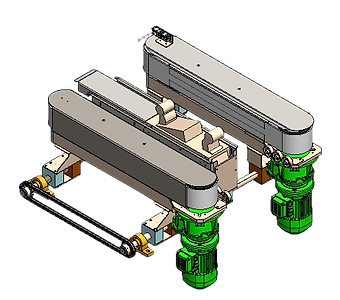
9.2 Bottom Tapping Machine
-
The Shipper Will Be Pushed By the Shipper Pushing Cylinder On Bottom Tapping.
-
It consists of a motor used for transferring the shipper from the bottom tape head.
-
The top guide plate is pressed by the shipper for proper application of the tape. The top guide plate applies pressure to the shipper to ensure proper and consistent tape application during the taping process.
-
After bottom taping, the shipper will be transferred to the main drive conveyor.
9.3. Maintenance
Important Precautions:
READ this manual before operating or servicing this equipment.
-
Always remove power and wait at least 30 seconds before connecting/disconnecting any internal harnesses. Failure to observe these precautions may result in damage to or destruction of the equipment.
-
ALWAYS take proper precautions when handling static sensitive devices.
-
SAVE this manual for future reference.
-
DO NOT allow untrained personnel to operate, clean, inspect, maintain, service or tamper with this equipment.
-
DO NOT connect or disconnect any digital or analogue components to the equipment with power connected or damage may result.
Click the below Maintenance Schedule for Bottom Taping
9.4. Risk Assessment
Risk Assessment or HAZOP, or a Hazard and Operability Study, is a systematic way to identify possible hazards in a work process. In this approach, the process is broken down into steps, and every variation in work parameters is considered for each step, to see what could go wrong.
Please refer the below attachment for HAZOP Document.
9.5. Troubleshooting
Troubleshooting is the process of identifying, diagnosing, and resolving problems or issues that arise in various systems, equipment, or processes. it involves a systematic approach to problem-solving, using a combination of analytical, technical, and problem-solving skills.
The first step in troubleshooting is to identify the problem. This can involve gathering information about the issue, including when it started, what systems or equipment are affected, and any error messages or symptoms that are observed. Once the problem is identified, the next step is to diagnose the root cause. This involves analyzing the information collected and using technical knowledge to determine what is causing the issue. After the root cause is identified, the next step is to develop a plan for resolving the issue.
Refer to the below about the Troubleshooting.
9.6 Spare Parts
Note: Click on the Description for details about Spare parts
3.
Description
Consumables
Essential
Recomended
Sr No.
1.
2.
2
2
2
2
10. Shipper Modular Conveyor
10.1.3D Model
.png)
-
Product Contact Parts - SS304
-
Product Non-Contact Parts - MS, RAL 7045
Shipper Modular Conveyor
10.2 Shipper Modular Conveyor
-
Shipper Transfer from the Bottom Taping Machine to the Main Drive.
-
When the shipper is detected by the stopper sensor, the stopper cylinder extends to stop the shipper.
-
The hopper cylinders then extend and open the shipper flaps.
-
The second stopper cylinder holds the incoming shipper in position until the front shipper has been completely filled by the gantry system.
-
Once the shipper has been filled, the hopper cylinders retract and the stopper cylinder releases the shipper. The next shipper then advances and is positioned below the hopper for the subsequent filling cycle.
-
The filled shipper will be transferred to Flat Belt Conveyor 1.
10.3. Maintenance
Important Precautions:
READ this manual before operating or servicing this equipment.
-
Always remove power and wait at least 30 seconds before connecting/disconnecting any internal harnesses. Failure to observe these precautions may result in damage to or destruction of the equipment.
-
ALWAYS take proper precautions when handling static sensitive devices.
-
SAVE this manual for future reference.
-
DO NOT allow untrained personnel to operate, clean, inspect, maintain, service or tamper with this equipment.
-
DO NOT connect or disconnect any digital or analogue components to the equipment with power connected or damage may result.
Click the below Maintenance Schedule for Shipper Modular Conveyor
10.4. Risk Assessment
Risk Assessment or HAZOP, or a Hazard and Operability Study, is a systematic way to identify possible hazards in a work process. In this approach, the process is broken down into steps, and every variation in work parameters is considered for each step, to see what could go wrong.
Please refer the below attachment for HAZOP Document.
10.5. Troubleshooting
Troubleshooting is the process of identifying, diagnosing, and resolving problems or issues that arise in various systems, equipment, or processes. it involves a systematic approach to problem-solving, using a combination of analytical, technical, and problem-solving skills.
The first step in troubleshooting is to identify the problem. This can involve gathering information about the issue, including when it started, what systems or equipment are affected, and any error messages or symptoms that are observed. Once the problem is identified, the next step is to diagnose the root cause. This involves analyzing the information collected and using technical knowledge to determine what is causing the issue. After the root cause is identified, the next step is to develop a plan for resolving the issue.
Refer to the below about the Troubleshooting.
10.6 Spare Parts
Note: Click on the Description for details about Spare parts
1
3.
5.
Description
Consumables
Essential
Recomended
Sr No.
1.
2.
4.
6.
7.
8.
9.
10.
1
1
1
1
1
1
1
1
1
1
11.
12.
13.
14.
15.
16.
17.
18.
19.
1
1
1
1
1
1
1
1
11. Falt Belt Conveyor -2
11.1.3D Model

-
Product Contact Parts - SS304
-
Product Non-Contact Parts - MS, RAL 7045
Flat Belt Conveyor - 2
11.2 Flat Belt Conveyor -2
-
The filled shipper will transfer from the main drive conveyor.
-
It consists of motors, sensors, and a helper code scanner.
-
The helper code scanner scans the shipper and transfers it to the top tapping machine.
11.3. Maintenance
Important Precautions:
READ this manual before operating or servicing this equipment.
-
Always remove power and wait at least 30 seconds before connecting/disconnecting any internal harnesses. Failure to observe these precautions may result in damage to or destruction of the equipment.
-
ALWAYS take proper precautions when handling static sensitive devices.
-
SAVE this manual for future reference.
-
DO NOT allow untrained personnel to operate, clean, inspect, maintain, service or tamper with this equipment.
-
DO NOT connect or disconnect any digital or analogue components to the equipment with power connected or damage may result.
Click the below Maintenance Schedule for Flat Belt Conveyor 2
11.4. Risk Assessment
Risk Assessment or HAZOP, or a Hazard and Operability Study, is a systematic way to identify possible hazards in a work process. In this approach, the process is broken down into steps, and every variation in work parameters is considered for each step, to see what could go wrong.
Please refer the below attachment for HAZOP Document.
11.5. Troubleshooting
Troubleshooting is the process of identifying, diagnosing, and resolving problems or issues that arise in various systems, equipment, or processes. it involves a systematic approach to problem-solving, using a combination of analytical, technical, and problem-solving skills.
The first step in troubleshooting is to identify the problem. This can involve gathering information about the issue, including when it started, what systems or equipment are affected, and any error messages or symptoms that are observed. Once the problem is identified, the next step is to diagnose the root cause. This involves analyzing the information collected and using technical knowledge to determine what is causing the issue. After the root cause is identified, the next step is to develop a plan for resolving the issue.
Refer to the below about the Troubleshooting.
11.6 Spare Parts
Note: Click on the Description for details about Spare parts
3.
5.
Description
Consumables
Essential
Recomended
Sr No.
1.
2.
4.
6.
7.
8.
1
1
1
1
1
1
1
1
1
12. Top Tapping Machine
12.1.3D Model
-
Product Contact Parts - SS304
-
Product Non-Contact Parts - MS, RAL 7045
Top Tapping Machine

12.2 Top Tapping machine
-
The taping machine receives the filled shipper from the flat belt conveyor 1.
-
It consists of motors, flap closing mechanisms, and sensors for tape application.
-
The machine closes flaps and applies tape on the shipper.
-
The sealed shipper is transferred to the labelling conveyor assembly.
12.3. Maintenance
Important Precautions:
READ this manual before operating or servicing this equipment.
-
Always remove power and wait at least 30 seconds before connecting/disconnecting any internal harnesses. Failure to observe these precautions may result in damage to or destruction of the equipment.
-
ALWAYS take proper precautions when handling static sensitive devices.
-
SAVE this manual for future reference.
-
DO NOT allow untrained personnel to operate, clean, inspect, maintain, service or tamper with this equipment.
-
DO NOT connect or disconnect any digital or analogue components to the equipment with power connected or damage may result.
Click the below Maintenance Schedule for Tapping Machine
12.4. Risk Assessment
Risk Assessment or HAZOP, or a Hazard and Operability Study, is a systematic way to identify possible hazards in a work process. In this approach, the process is broken down into steps, and every variation in work parameters is considered for each step, to see what could go wrong.
Please refer the below attachment for HAZOP Document.
12.5. Troubleshooting
Troubleshooting is the process of identifying, diagnosing, and resolving problems or issues that arise in various systems, equipment, or processes. it involves a systematic approach to problem-solving, using a combination of analytical, technical, and problem-solving skills.
The first step in troubleshooting is to identify the problem. This can involve gathering information about the issue, including when it started, what systems or equipment are affected, and any error messages or symptoms that are observed. Once the problem is identified, the next step is to diagnose the root cause. This involves analyzing the information collected and using technical knowledge to determine what is causing the issue. After the root cause is identified, the next step is to develop a plan for resolving the issue.
Refer to the below about the Troubleshooting.
12.6 Spare Parts
Note: Click on the Description for details about Spare parts
3.
Description
Consumables
Essential
Recomended
Sr No.
1.
2.
4.
1
1
1
1
13. Flat Belt Conveyor with Label Applicator
13.1.3D Model
-
Product Contact Parts - SS304
-
Product Non-Contact Parts - MS, RAL 7045
Flat Belt Conveyor with Label Applicator

13.2 Flat Belt Conveyor with Label Applicator
-
The labeling conveyor receives the sealed shipper from the Taping Machine Assembly and transfers it towards the end of the conveyor.
-
It consists of two helper code scanners that check whether the label has been applied properly.
-
Two sensors are provided on either side of the conveyor to detect shipper presence at the label application positions.
-
The conveyor moves the shipper in a controlled manner through both label application stations.
-
The shipper is positioned correctly for labeling.
13.3. Maintenance
Important Precautions:
READ this manual before operating or servicing this equipment.
-
Always remove power and wait at least 30 seconds before connecting/disconnecting any internal harnesses. Failure to observe these precautions may result in damage to or destruction of the equipment.
-
ALWAYS take proper precautions when handling static sensitive devices.
-
SAVE this manual for future reference.
-
DO NOT allow untrained personnel to operate, clean, inspect, maintain, service or tamper with this equipment.
-
DO NOT connect or disconnect any digital or analogue components to the equipment with power connected or damage may result.
Click the below Maintenance Schedule for Labelling Conveyor
13.4. Risk Assessment
Risk Assessment or HAZOP, or a Hazard and Operability Study, is a systematic way to identify possible hazards in a work process. In this approach, the process is broken down into steps, and every variation in work parameters is considered for each step, to see what could go wrong.
Please refer the below attachment for HAZOP Document.
13.5. Troubleshooting
Troubleshooting is the process of identifying, diagnosing, and resolving problems or issues that arise in various systems, equipment, or processes. it involves a systematic approach to problem-solving, using a combination of analytical, technical, and problem-solving skills.
The first step in troubleshooting is to identify the problem. This can involve gathering information about the issue, including when it started, what systems or equipment are affected, and any error messages or symptoms that are observed. Once the problem is identified, the next step is to diagnose the root cause. This involves analyzing the information collected and using technical knowledge to determine what is causing the issue. After the root cause is identified, the next step is to develop a plan for resolving the issue.
Refer to the below about the Troubleshooting.
13.6 Spare Parts
Note: Click on the Description for details about Spare parts
3.
5.
Description
Consumables
Essential
Recomended
Sr No.
1.
2.
4.
6.
7.
8.
1
1
1
1
1
1
1
1
1
9.
14. Power Roller & Rejection Conveyor
14.1.3D Model
-
Product Contact Parts - SS304
-
Product Non-Contact Parts - MS, RAL 7045
Power Roller & Rejection Conveyor

14.2 Power Roller & Rejection Conveyor
-
After label application, the shipper will be transferred to the powered roller conveyor.
-
The helper code scanner will verify whether the label has been applied correctly.
-
If the label is applied correctly, the shipper will move to the end of the conveyor and be picked up by the robot.
-
If the label is not applied correctly, the shipper stopper will extend, and the rejection cylinder will push the shipper onto the rejection conveyor.
14.3. Maintenance
Important Precautions:
READ this manual before operating or servicing this equipment.
-
Always remove power and wait at least 30 seconds before connecting/disconnecting any internal harnesses. Failure to observe these precautions may result in damage to or destruction of the equipment.
-
ALWAYS take proper precautions when handling static sensitive devices.
-
SAVE this manual for future reference.
-
DO NOT allow untrained personnel to operate, clean, inspect, maintain, service or tamper with this equipment.
-
DO NOT connect or disconnect any digital or analogue components to the equipment with power connected or damage may result.
Click the below Maintenance Schedule for Power Roller & Rejection Conveyor
14.4. Risk Assessment
Risk Assessment or HAZOP, or a Hazard and Operability Study, is a systematic way to identify possible hazards in a work process. In this approach, the process is broken down into steps, and every variation in work parameters is considered for each step, to see what could go wrong.
Please refer the below attachment for HAZOP Document.
14.5. Troubleshooting
Troubleshooting is the process of identifying, diagnosing, and resolving problems or issues that arise in various systems, equipment, or processes. it involves a systematic approach to problem-solving, using a combination of analytical, technical, and problem-solving skills.
The first step in troubleshooting is to identify the problem. This can involve gathering information about the issue, including when it started, what systems or equipment are affected, and any error messages or symptoms that are observed. Once the problem is identified, the next step is to diagnose the root cause. This involves analyzing the information collected and using technical knowledge to determine what is causing the issue. After the root cause is identified, the next step is to develop a plan for resolving the issue.
Refer to the below about the Troubleshooting.
14.6 Spare Parts
Note: Click on the Description for details about Spare parts
3.
5.
Description
Consumables
Essential
Recomended
Sr No.
1.
2.
4.
6.
7.
8.
9.
10.
1
1
1
1
1
1
1
1
1
1
15. Robot & Pallet Locater
15.1.3D Model
-
Product Contact Parts - SS304
-
Product Non-Contact Parts - MS, RAL 7045
Robot & Pallet Locater

15.2 Robot & Pallet Locater
-
The robot (Fanuc M-710iD/50M) picks the shipper from the end of the power roller conveyor.
-
It consists of a pick head, suction cups, and pallet sensors.
-
It places the shipper onto the pallet according to the specified pallet pattern..
-
The pick head uses vacuum Cups with pressure feedback.
-
If pick fails, the robot returns home and generates an alarm.
15.3. Maintenance
Important Precautions:
READ this manual before operating or servicing this equipment.
-
Always remove power and wait at least 30 seconds before connecting/disconnecting any internal harnesses. Failure to observe these precautions may result in damage to or destruction of the equipment.
-
ALWAYS take proper precautions when handling static sensitive devices.
-
SAVE this manual for future reference.
-
DO NOT allow untrained personnel to operate, clean, inspect, maintain, service or tamper with this equipment.
-
DO NOT connect or disconnect any digital or analogue components to the equipment with power connected or damage may result.
Click the below Maintenance Schedule for Robot Pallet Locater
15.4. Risk Assessment
Risk Assessment or HAZOP, or a Hazard and Operability Study, is a systematic way to identify possible hazards in a work process. In this approach, the process is broken down into steps, and every variation in work parameters is considered for each step, to see what could go wrong.
Please refer the below attachment for HAZOP Document.
15.5. Troubleshooting
Troubleshooting is the process of identifying, diagnosing, and resolving problems or issues that arise in various systems, equipment, or processes. it involves a systematic approach to problem-solving, using a combination of analytical, technical, and problem-solving skills.
The first step in troubleshooting is to identify the problem. This can involve gathering information about the issue, including when it started, what systems or equipment are affected, and any error messages or symptoms that are observed. Once the problem is identified, the next step is to diagnose the root cause. This involves analyzing the information collected and using technical knowledge to determine what is causing the issue. After the root cause is identified, the next step is to develop a plan for resolving the issue.
Refer to the below about the Troubleshooting.
15.6 Spare Parts
Note: Click on the Description for details about Spare parts
Description
Consumables
Essential
Recomended
Sr No.
1.
1